
PLC & Hardware Logistic Systems

PLC & Hardware Logistic Systems: Automated Speed and Accuracy
PLC & Hardware Logistic Systems combine Programmable Logic Controllers (PLCs) with sophisticated material handling equipment to automate the movement, sorting, and tracking of goods within a large commercial enterprise. These systems are the technological backbone of modern e-commerce fulfillment centers, automated warehouses, and large distribution hubs. Their primary purpose is to ensure high-volume throughput, maximize inventory accuracy, and reduce labor costs—a critical function for businesses where speed and precision in unit handling are paramount.
Core Technology and Automation Components
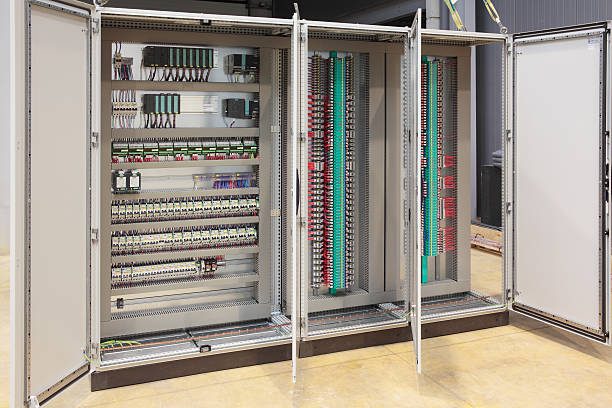
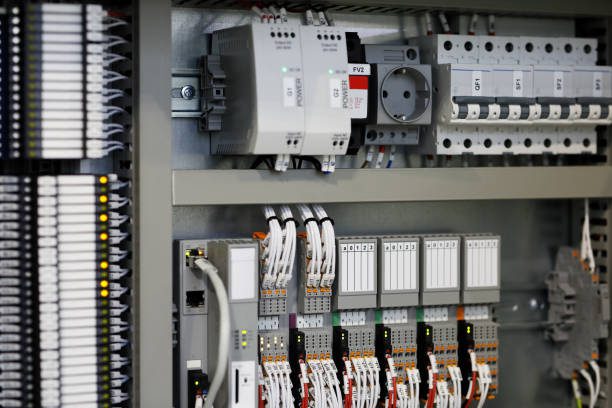
The system relies on high-speed PLC controllers to execute complex sequential logic that orchestrates physical movements. These controllers manage key commercial hardware components, including conveyor systems, high-speed sorters, automated storage and retrieval systems (AS/RS), and sophisticated scanning equipment. Unlike large-scale industrial process control (which monitors temperature, pressure, and chemical flow), the commercial logistics PLC focuses on discrete control—ensuring that packages, totes, or individual items are moved, diverted, and identified in milliseconds. This precision is achieved through an array of networked devices, including high-speed barcode scanners, proximity sensors, and encoders, all communicating over low-voltage Industrial Ethernet networks.
Key Commercial Applications and Throughput
The integration of PLC logic with low-voltage commercial hardware provides immediate operational benefits:
- E-commerce Fulfillment: Rapidly picking, packing, and sorting individual customer orders for next-day delivery, increasing operational throughput.
- Automated Sortation: Guiding thousands of items per hour to the correct outbound dock or storage location with near-perfect accuracy.
- Inbound Receiving and Palletizing: Automatically identifying incoming inventory and sequencing it for storage or immediate cross-docking.
Inventory Control & Tracking: Providing real-time visibility into the location and status of every item within the facility, minimizing losses and improving planning.
System Integration and Scalability
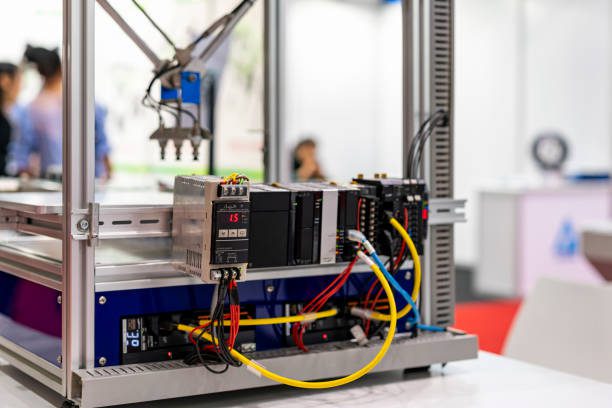
A successful commercial logistic system is defined by its ability to integrate seamlessly with the IT architecture. PLCs must communicate directly with the Warehouse Management System (WMS) and Enterprise Resource Planning (ERP) software to receive dynamic sorting instructions and return real-time data on inventory movement. The physical hardware is controlled and monitored from a central Network Operations Center (NOC), leveraging the facility’s Enterprise Networking backbone for high reliability and data integrity. These systems are designed to be highly scalable, allowing businesses to add zones, conveyors, and sorters incrementally as their fulfillment volumes grow, ensuring the infrastructure is future-proof and the investment has a strong ROI.

Secure Your Logistics Future with 4th Systems
Implementing a high-speed, integrated PLC & Hardware Logistic System demands specialized expertise in both control logic and commercial low-voltage infrastructure. Incorrect programming or cabling can lead to disastrous bottlenecks, damaged goods, and costly downtime. 4th Systems specializes in the design, engineering, and commissioning of commercial-grade automation and material handling systems. We guarantee seamless integration between your physical hardware and your WMS/ERP platforms, ensuring maximum accuracy and throughput. Contact 4th Systems today to optimize your operational efficiency and transform your logistics backbone.