
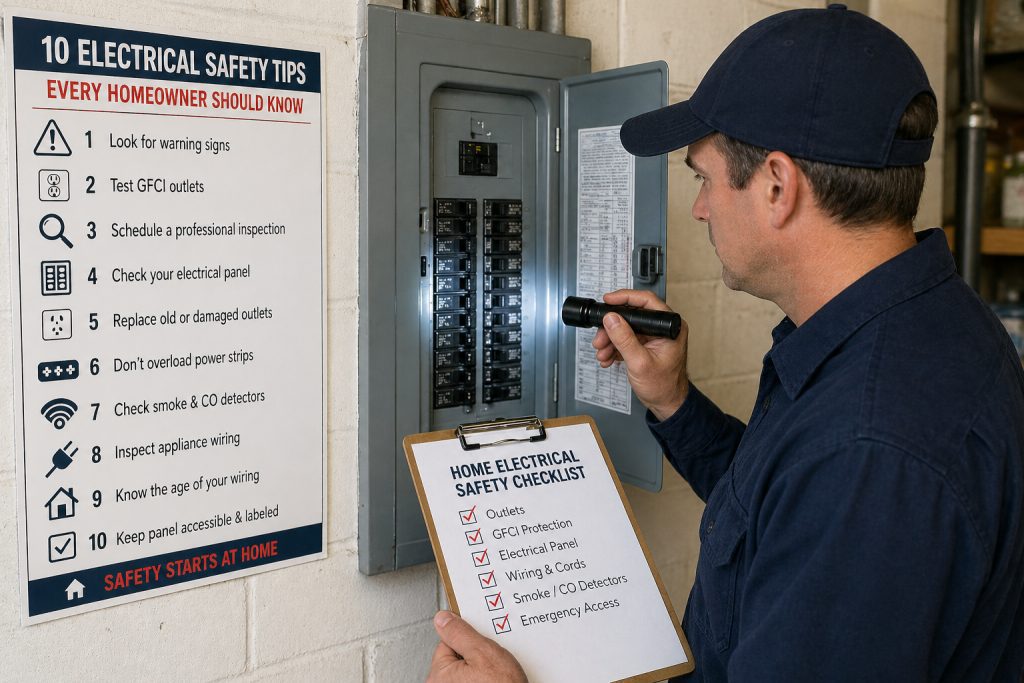
Most Bellevue homeowners think about electrical safety only when something goes wrong. But by then, the damage may already be done. Electrical hazards are one of the leading causes of house fires in the U.S., and many of them are entirely preventable. A quick yearly review of your home’s electrical system can catch small problems before they become dangerous — and expensive. Here are 10 practical electrical safety tips every homeowner in Bellevue should make part of their annual routine.
1. Look for Warning Signs of Electrical Hazards
Start with a simple walkthrough. Look for flickering lights, outlets that feel warm to the touch, or breakers that trip repeatedly. These aren’t minor annoyances — they’re warning signs of underlying electrical hazards. Don’t ignore them.
2. Test Every GFCI Outlet in Your Home
GFCI (Ground Fault Circuit Interrupter) outlets are required near water sources like kitchens, bathrooms, and garages. Press the “Test” and “Reset” buttons on each one to confirm they’re working. A non-functional GFCI outlet is a serious shock hazard.
3. Schedule a Professional Home Electrical Inspection
One of the best electrical safety tips we can offer: don’t rely only on what you can see. A licensed electrician can catch issues hidden inside walls, panels, and wiring. A home electrical inspection is especially important if your home is more than 20 years old or if you’ve recently done major renovations.
4. Check Your Electrical Panel for Overloading
Open your breaker panel and look for signs of trouble — double-tapped breakers, rust, scorch marks, or breakers that feel hot. These are red flags. An overloaded or outdated panel is a leading cause of house fires.
5. Replace Old or Damaged Outlets and Switches
Cracked outlet covers, loose plugs, and discolored switches should be replaced immediately. Worn outlets can cause arcing, which can ignite nearby materials. This is one of the easiest fire prevention steps a homeowner can take.
6. Don’t Overload Power Strips or Extension Cords
Extension cords are meant to be temporary. If you’re relying on them permanently, that’s a sign you need additional outlets installed. Overloaded power strips are a top cause of home electrical fires — especially during winter when space heaters run constantly.
7. Check Smoke and Carbon Monoxide Detectors
Test every detector in your home monthly and replace batteries at least once a year. If a detector is more than 10 years old, replace the whole unit. This is basic fire prevention that saves lives.
8. Inspect Wiring Around Appliances and Fixtures
Look at the cords on your major appliances. Fraying, cracking, or pinching in the cord’s insulation is a shock and fire risk. Never run cords under rugs or through doorways — heat builds up and can ignite surrounding material.
9. Know the Age of Your Home’s Wiring
Homes built before 1980 may have aluminum wiring or outdated knob-and-tube systems. These can fail over time and don’t meet current safety standards. If you don’t know what type of wiring you have, a home electrical inspection will tell you — and may qualify you for updated homeowner’s insurance rates.
10. Keep Your Electrical Panel Accessible and Labeled
Your panel should be easy to reach and clearly labeled. In an emergency, every second counts. Make sure all breakers are labeled correctly so anyone in the household can shut off power quickly if needed.
Frequently Asked Questions About Electrical Safety for Homeowners
How often should I get a home electrical inspection in Bellevue? Most experts recommend a home electrical inspection every three to five years for newer homes, and every one to two years for homes over 25 years old. If you’ve added major appliances or renovated recently, schedule one sooner.
What are the most common electrical hazards in older homes? Older homes often have outdated wiring, undersized panels, and a lack of GFCI protection. These are among the most common electrical hazards and are worth addressing before they lead to a fire or injury.
Can I do my own electrical safety checks, or do I need an electrician? You can handle visual inspections and simple tasks like testing GFCI outlets or replacing outlet covers. But any work involving your panel, wiring, or new circuits should be done by a licensed electrician. It’s safer and ensures the work is up to code.
Ready to Make Your Home Safer? Let’s Talk.
If your home is overdue for an inspection — or you’ve noticed any of the warning signs above — the team at 4th Systems is here to help. We serve Bellevue and the surrounding area with reliable, professional electrical services. Call us today or book your appointment online and start the new year with a home you can trust.
Posted on March 13, 2026 | Published by Ignite Local | Related Local Business